Fake Crypto Influencers – How AI Deepfakes on YouTube Are Stealing Millions
Updated October 4, 2026
You’re watching a YouTube video. The presenter is confident, articulate, and knowledgeable. Professional studio setup, smooth delivery, a channel with hundreds of thousands of subscribers. They’re explaining a trading strategy or a new arbitrage opportunity, and they’re offering to share the exact tool they use – for free.
None of it is real. The presenter doesn’t exist. The channel was hijacked last week. And the tool will drain your wallet.
The short version: AI can now produce convincing fake presenters and convincing fakes of real people like Elon Musk. You can’t rely on spotting the fake by eye anymore. What you can rely on are a few rules that never change: no real giveaway asks you to send crypto first, no legitimate tool asks you to paste code or fund a contract you don’t understand, and a real influencer can be found and verified outside the video.
How Big Is This?
AI has made impersonation scams both cheaper to run and more profitable. Blockchain analytics firm Chainalysis found that scams with on-chain links to AI service vendors pulled in about $3.2 million per operation in 2025, compared with $719,000 for scams without those links – about 4.5 times more. TRM Labs, citing data from the scam-reporting platform Chainabuse, reported a 456% increase in reports of generative-AI-enabled scams between May 2024 and April 2025 compared with the previous year. Deepfaked celebrity giveaways are the most commonly reported type.
What You’re Actually Seeing
There are two main types of fake crypto influencers on YouTube:
Type 1 – Hijacked Legitimate Channels
Attackers take over real YouTube accounts, scrub the old videos, rename the channel, and redesign it to look like a reputable crypto channel or even an official company. A channel that spent years building a following for gaming or cooking content is suddenly a crypto channel overnight. The subscriber count is real – it just belongs to an audience that has no idea the channel changed hands.
Security researchers at SentinelLABS documented scammers deliberately using these aged accounts in 2025 because an old account with history looks more trustworthy than a brand-new one. Comment sections are often filled with fake praise or heavily filtered to remove warnings.
Type 2 – Fully AI-Generated Personas
Security company Gen (the company behind Norton) tracked one prolific fake persona that went by Thomas Harris – and sometimes Thomas Roberts, Oscar Davies, or other invented names. Across more than 500 videos, this deepfake character promoted tools like “ChatGPT AI Charts” and “smart trading bots,” and sent viewers to lookalike domains such as “tradlngview” (with a lowercase “l” in place of the “i”).
These personas have no presence outside the videos: no real social media history, no verifiable identity. Their faces, voices, and scripts are generated or built from real actors’ likenesses, and they can produce content at a scale no human creator could match.
The Elon Musk Problem
The highest-profile version of this scam uses deepfakes of real, recognizable people.
The playbook is simple and keeps coming back. During big moments like a SpaceX launch, hijacked channels rebranded as “SpaceX” or “Tesla” broadcast a fake livestream. A deepfaked Musk says the company is “giving back” and promises to double any crypto sent to an address on screen. During SpaceX’s fourth Starship test launch in June 2024, researchers counted more than 35 fake Musk livestreams running at once – one channel drew around 170,000 viewers, many likely bots. When YouTube took it down, the same channel rebranded to impersonate the Cardano Foundation with a deepfake of its founder.
Individual streams often take in modest amounts, but the operations add up. TRM Labs traced at least $5 million received by one deepfake giveaway operation between March 2024 and January 2025. The same playbook has been used with Vitalik Buterin, exchange CEOs, politicians, and other recognizable figures.
The Trading Bot Scam – A Closer Look
Beyond the giveaway format, a more sophisticated version uses AI presenters to teach a “trading strategy.”
In 2025, SentinelLABS documented YouTube tutorials – narrated by AI-generated avatars and voices – showing viewers how to deploy a free “MEV” or arbitrage trading bot. Victims were told to paste code into Remix, a web-based tool for deploying smart contracts, fund the contract with ETH, and press “Start.” The code was disguised with obfuscation tricks so the attacker’s wallet address didn’t appear in plain text. The contract quietly listed the attacker as a co-owner and sent the deposited ETH straight to them.
The results were real. SentinelLABS tracked more than $1 million stolen, including about 244.9 ETH – roughly $902,000 at the time – collected by one wallet from a single video with more than 387,000 views. Because the presenter walked through every step in a professional-looking video, victims believed they were learning a legitimate technique.
The lesson goes beyond YouTube: AI also writes the follow-up DMs, comments, and emails, with flawless grammar and a friendly tone. Polish is no longer a sign of legitimacy.
How to Spot a Fake
Check the channel’s history, not just its subscriber count. Open the channel’s About section and look at the join date and total views, then scroll back through older videos. If a channel is years old but only started posting crypto content recently – or its old videos are gone – it was likely hijacked. A genuine crypto creator has years of consistent content in the same niche.
Look for the person anywhere else. A real influencer exists on multiple platforms – X, their own website, podcasts, conference appearances. Search the name. If the presenter can’t be verified anywhere outside the video, assume they aren’t real.
Check whether the “official” channel is actually official. SpaceX, Tesla, and crypto companies list their real social accounts on their own websites. A livestream from a channel that isn’t linked there is not official, no matter what its name says.
Read the comments with suspicion. Scam channels often disable comments or filter out warnings. When comments are on, look for identical praise from accounts with no history, generic thank-you messages, and no critical voices at all.
The send-to-receive offer is always a scam. No legitimate giveaway asks you to send crypto first. Not from Elon Musk, not from Vitalik, not from any exchange or project. Ever. “Send 1, get 2 back” has been a scam since the day it first appeared and always will be.
Never paste code or fund a contract because a video told you to. If you can’t read and understand the code yourself, you can’t know where your money goes. A “free bot” that requires you to deposit ETH into a contract is the scam.
Notice the too-perfect delivery – but don’t depend on it. AI presenters can be unnaturally smooth or slightly off in how they blink, move, or pause. Pay attention to that feeling, but understand the technology is improving fast. The behavioral rules above are more reliable than your eyes.
Verify any tool independently before touching it. Before visiting a link, connecting a wallet, or downloading anything from a video, search for the tool on its own. If it only exists in the context of that video – or its web address is a near-miss of a real site – walk away. Fake apps spread the same way; see our fake crypto apps guide.
What To Do
If you saw a suspicious livestream or video: Report it to YouTube using the report function. If a real person is being impersonated, you can also notify them through their verified accounts – most major crypto figures want to know when they’re being deepfaked.
If you sent crypto to a giveaway: The funds are gone – crypto transactions are irreversible. Report it to the FBI at ic3.gov and to the FTC at reportfraud.ftc.gov. Don’t pay anyone offering to recover it; recovery scams target people who’ve just been scammed.
If you deployed or funded a contract from a video: Assume anything you sent to it is gone. If you also approved tokens or signed anything along the way, revoke unknown approvals on Revoke.cash and move your remaining assets to a fresh wallet. Our wallet drainer approvals guide explains what to check.
If you downloaded software from a video: Treat the device as compromised. From a different, clean device, move your crypto to a new wallet and change your passwords, starting with email.
The Broader Pattern
The AI influencer scam isn’t a niche problem. Impersonation is now the fastest-growing type of crypto scam – Chainalysis estimates impersonation scams grew about 1,400% in 2025 – and AI is a big part of why. The production quality of fake content has crossed the point where visual inspection alone is no longer a reliable defense.
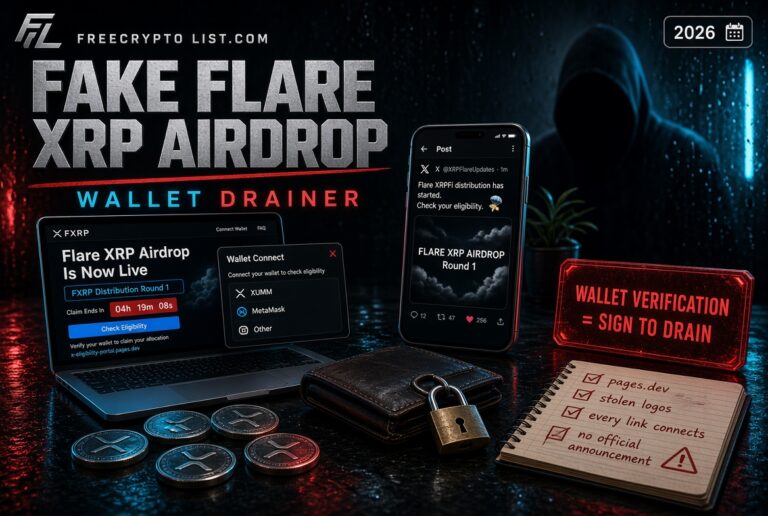
The reliable defenses are behavioral: never send crypto to receive crypto, never run or fund code you don’t understand, always verify independently, and always check a channel’s history before trusting its presenter. The same rules protect you from related scams we’ve covered, including pig butchering, Discord and Telegram social engineering, and our live-documented fake Flare XRPFi airdrop.
A real influencer can be found. A fake one only exists where they want you to look.
📖 In This Section Pig Butchering · Discord & Telegram Scams · Fake Crypto Apps · Complete Security Guide
No. Livestreams showing Elon Musk promising to double any crypto you send are deepfake scams, usually run on hijacked channels renamed to look like SpaceX or Tesla. During one SpaceX launch in June 2024, researchers counted more than 35 fake Musk livestreams running at the same time. No legitimate giveaway ever asks you to send crypto first.
Check the channel’s history: an old channel that only recently switched to crypto, or whose older videos have disappeared, was likely hijacked. Search for the presenter outside YouTube; a real creator has a verifiable presence on other platforms. Be wary of filtered or generic comments, and remember that AI delivery is getting harder to spot by eye, so rely on these checks rather than how the video looks.
Videos, often narrated by AI avatars, show viewers how to deploy a free arbitrage or MEV trading bot by pasting code into a tool called Remix and funding the contract with ETH. The code is disguised to send the deposit to the scammer. Security researchers at SentinelLABS tracked more than $1 million stolen this way in 2025, including about $902,000 from a single video.
Because the subscribers are real but belong to someone else. Scammers hijack established channels, delete or hide the old videos, and rename them to look like a crypto channel or an official company. The large subscriber count makes the channel look trustworthy, even though those viewers signed up for completely different content.
Almost never, because crypto transactions can’t be reversed. Report it to the FBI at ic3.gov and the FTC at reportfraud.ftc.gov, and report the channel to YouTube. Don’t pay anyone who contacts you offering to recover the funds, since recovery scams specifically target people who have just lost money.
Sources:
- Chainalysis – 2026 Crypto Crime Report: Scams
- TRM Labs – AI-enabled fraud
- CoinDesk – Weaponized trading bots drain $1M via AI-generated YouTube scam
- crypto.news – Malicious trading bots siphon $900K via aged YouTube accounts
- Techlicious – AI crypto influencers on YouTube (Gen threat report)
- Cointelegraph via TradingView – 35+ fake Elon Musks during SpaceX launch