Pig Butchering – The Crypto Scam That Starts With a Wrong Number Text
Updated October 4, 2026
It starts with a wrong number text.
“Hi, is this Sarah?” Or maybe it’s a LinkedIn connection request from someone attractive who seems to work in finance. Or a WhatsApp message from someone who saw your comment in a crypto group and wants to share something privately.
It feels harmless. Someone made a mistake, or someone is being friendly. You respond. They apologize, introduce themselves, start a conversation. They’re charming, interested in your life, never pushy. Weeks pass. You look forward to hearing from them.
And then one day, almost casually, they mention how well their investments have been doing lately.
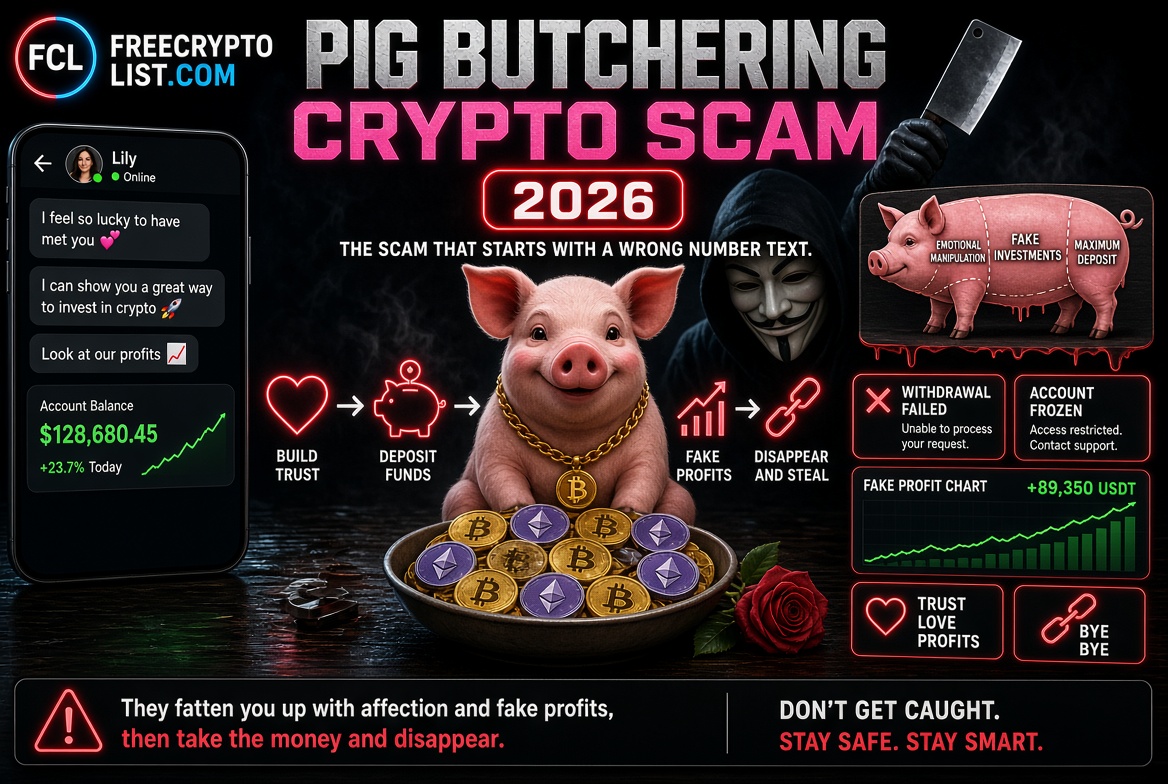
That’s pig butchering. The short version: it’s a long-con investment scam where a stranger builds a friendship or romance with you over weeks or months, then guides you onto a fake crypto trading platform that shows huge gains you can never withdraw. By the time most victims realize what’s happening, they’ve lost far more than they ever meant to invest.
Where the Name Comes From
The term is a translation of a Chinese phrase, “sha zhu pan” – literally “pig-butchering plate.” It refers to fattening a pig before slaughter: scammers “fatten” victims with attention and fake profits before taking everything.
This isn’t a lone scammer working from a bedroom. It’s an industry. Much of it runs out of large scam compounds in Southeast Asia – particularly Cambodia, Myanmar, and Laos – where many of the people typing the messages are themselves trafficking victims, forced to work scripts under threat of violence.
The scale is staggering. According to US Justice Department figures, Americans reported $7.2 billion in investment scam losses in 2025, up from $5.8 billion in 2024 and $3.96 billion in 2023 – much of it from pig butchering-style schemes run out of these compounds. In October 2025, the DOJ filed the largest forfeiture action in its history: roughly 127,271 bitcoin, worth about $15 billion at the time, tied to Chen Zhi and the Cambodia-based Prince Group, which US authorities accuse of running forced-labor scam compounds. Chen Zhi was arrested in Cambodia and sent to China in January 2026.
How It Works – The Full Playbook
Phase 1 – The Wrong Contact
The scammer starts with a message that seems accidental or harmless: wrong number texts, dating app matches, LinkedIn connections, Instagram follows, WhatsApp group invitations. The opening always feels natural – not a sales pitch, just a person reaching out.
Scammers may spend weeks or even months in casual conversation before introducing the scam. During that time they build a detailed picture of you – your finances, your dreams, your worries, your relationships – and use it later to make the investment pitch feel personal.
Phase 2 – The Relationship
The scammer invests serious time building an emotional connection. They remember details from earlier conversations. They ask about your life. They share their own struggles and successes – carefully crafted fiction designed to make them relatable and trustworthy. Many now use AI tools to write messages and translate in real time, and some use deepfake photos or video to keep the persona convincing.
Sometimes it becomes a romance. Sometimes it’s friendship or mentorship. The category doesn’t matter – what matters is that you trust them personally before money ever comes up.
Phase 3 – The Introduction
After weeks or months, the scammer mentions their investments almost in passing. They’re not selling you anything – just sharing something that’s worked for them. They show screenshots of their profits. They mention a platform an uncle or a friend introduced them to. They offer to help you get started, no pressure, just because they care about you.
Michael Peck, an Assistant Special Agent in Charge with the US Secret Service, described it bluntly in April 2026: “They entice you to invest, you invest a small amount. Suddenly that amount explodes in value.” That early success is engineered. The platform is fake. The profits are numbers on a screen.
Phase 4 – The Fattening
This is the phase that gives the scam its name. You deposit money and watch it grow dramatically on the platform’s dashboard. You’re encouraged to deposit more – a time-limited window, a VIP tier, a chance to compound gains before some market event.
The more you invest, the more the fake profits grow. Small withdrawals are often allowed early on to build confidence – you really do take out a little profit, which “proves” the platform is real.
Phase 5 – The Slaughter
When you try to withdraw a significant amount, problems appear. A tax must be paid first. A verification fee is required. The account has been flagged and needs to be “unlocked.” Each obstacle requires another payment.
Victims are pressured – sometimes with the threat that the relationship will end – to find more money. Some pay these fees again and again, each time believing they’re one step from getting their funds out. Eventually the scammer disappears, the platform goes offline, and the money is gone.
The relationship – which felt completely real – was a script from the first message.
Why Pig Butchering Works
Most crypto scams exploit greed. Pig butchering exploits something more basic – the human need for connection.
By the time the investment pitch arrives, you’re not making a financial decision based on a stranger’s tip. You’re trusting someone you feel you know – someone who has been part of your daily life for weeks or months. That emotional investment makes the financial decision feel safe.
Crypto’s complexity helps the scammers too. As Agent Peck put it: “Crypto is complex… even I get confused.” Scammers capitalize on people feeling the energy of making money – “and then it’s gone.”
The fake platform reinforces every positive feeling. It shows exactly the gains you hoped for, uses professional design and real-sounding support staff, and has just enough friction to feel legitimate – without ever allowing a real withdrawal.
A close cousin of this scam skips the romance and offers a fake online job instead, paying small amounts before demanding crypto deposits. If that sounds familiar, read our crypto task scams guide – the fake dashboard and the “pay to withdraw” ending are identical.
The Recovery Scam – A Second Attack
Pig butchering victims are often targeted a second time by recovery scammers – people posing as lawyers, blockchain investigators, or government agencies who promise to recover the lost funds for an upfront fee.
In August 2025, the FBI specifically warned about fake law firms targeting crypto scam victims. They build trust because they seem to know exactly how much you lost – details they may have bought or gotten from the original scammers. They ask for fees, “bank verification” payments, or your account details.
If anyone contacts you claiming they can recover crypto you lost to a scam for a fee, they’re running another scam. Real law enforcement never charges you to recover funds.
One thing worth knowing: the FBI’s Operation Level Up does contact victims directly – often people who don’t yet realize they’re being scammed – and says it has notified thousands of victims and helped prevent hundreds of millions in losses. If you get a call like that, verify it independently through the FBI’s official website, and remember that the real FBI will never ask you for money.
Red Flags – Recognize It Before Phase 3
The contact was unsolicited and random. Wrong number, unexpected connection request, out-of-nowhere message. As Agent Peck said, a random text inviting you to “join our group to invest” means you’re being scammed.
They moved the conversation off the original platform quickly. From LinkedIn to WhatsApp, from a dating app to Telegram. Scammers prefer apps with less moderation and fewer records.
They avoid video calls or always have an excuse. Broken camera, bad connection, busy schedule – or a short, oddly stiff video that may be a deepfake.
The investment platform is one you’ve never heard of. Not Coinbase, not Kraken, not a regulated exchange – a custom app or website with an unfamiliar name you can’t verify through independent research. Sometimes it’s a lookalike of a real exchange.
Profits are unrealistically high and consistent. Real investments go up and down. A platform showing steady, dramatic gains with no losses is fake.
Withdrawal requires additional payments. Any platform that makes you pay fees or taxes before releasing your own funds is a scam. No exceptions.
The relationship escalated unusually fast. Someone you met weeks ago is now deeply invested in your financial wellbeing and steering you toward a specific platform.
What To Do
If you think you’re in the early stages: Stop all contact immediately. You don’t owe them an explanation. Report the account on the platform where the contact started. If a romantic relationship has developed, talk to someone you trust in person before making any financial decision.
If you’ve already deposited money: Don’t deposit more under any circumstances – not to pay fees, not to unlock funds, not for any reason. Contact your bank right away if bank transfers were involved, and tell the exchange you used to buy the crypto. Report it to the FBI at ic3.gov and to the FTC at reportfraud.ftc.gov, and consider contacting your state’s financial regulator.
If you’ve lost funds: File reports with ic3.gov and reportfraud.ftc.gov, including wallet addresses, transaction IDs, the platform’s website, and screenshots of your conversations. Don’t pay recovery services.
The Honest Reality About Recovery
Getting money back from a pig butchering scam is rare. Crypto transactions are irreversible, and the networks behind these operations are sophisticated and international. Chainalysis found that Chinese-language money laundering networks alone processed about $16.1 billion in illicit crypto in 2025 – roughly $44 million a day – including a share of pig butchering proceeds.
But reporting still matters. US authorities have restrained or seized billions in scam-linked crypto, and a dedicated DOJ Scam Center Strike Force has been taking down scam websites and charging compound operators. Your report helps build those cases – just don’t count on it bringing your money back.
The best protection is recognizing the pattern before Phase 3. Anyone who contacts you out of the blue and later introduces an investment opportunity is following a script. The warmth was engineered. The relationship was constructed. The platform is fake.
For the broader set of habits that protect your crypto, see our complete crypto security guide. And if you want to see how similar trust-building plays out in crypto communities, read our Discord and Telegram social engineering guide and the real scam DM we dissected.
📖 In This Section Crypto Task Scams · Fake Crypto Influencers · Discord & Telegram Scams · Complete Security Guide
Pig butchering is a long-con investment scam where a stranger builds a friendship or romance with you over weeks or months, then introduces a crypto trading platform. The platform is fake and shows large gains to encourage bigger deposits, but when you try to withdraw, you’re asked for fees and taxes until the scammer disappears with everything.
The name translates a Chinese phrase, sha zhu pan, meaning “pig-butchering plate.” It describes how scammers “fatten” victims with attention, trust, and fake profits over time before taking all of their money.
Billions. US Justice Department figures show Americans reported $7.2 billion in investment scam losses in 2025, up from $5.8 billion in 2024, much of it from pig butchering-style schemes run from scam compounds in Southeast Asia. In October 2025, the DOJ filed its largest-ever forfeiture action, about $15 billion in bitcoin, against the Cambodia-based Prince Group.
Yes. Allowing small early withdrawals is a deliberate tactic to make the platform look real and encourage much larger deposits. The large balance that builds up afterward is just numbers on a screen. If withdrawing a larger amount suddenly requires taxes, fees, or account unlocking payments, it’s a scam.
No. Paying will not release your money, because the profits shown don’t exist. Every fee, tax, or unlock payment is simply more money lost. Stop paying, stop contacting the person, save your records, and report it to ic3.gov and reportfraud.ftc.gov.
Be extremely careful. The FBI has warned that fake law firms and recovery services target pig butchering victims, often knowing exactly how much was lost. Anyone who contacts you offering recovery for an upfront fee is running another scam. Real law enforcement never charges you to recover funds.
Sources:
- US DOJ – Scam Center Strike Force actions (Apr 2026)
- Elliptic – Prince Group $15B seizure and sanctions
- DL News – Chen Zhi arrested in Cambodia
- Live 5 News – Secret Service warns of pig butchering (Apr 2026)
- The Record – Chinese money launderers moved $16B+ in 2025
- Decrypt – Fake law firms targeting crypto scam victims