How Meme Tokens Front-Run Chain Launches – And Why Most Lose Everything
Updated October 4, 2026
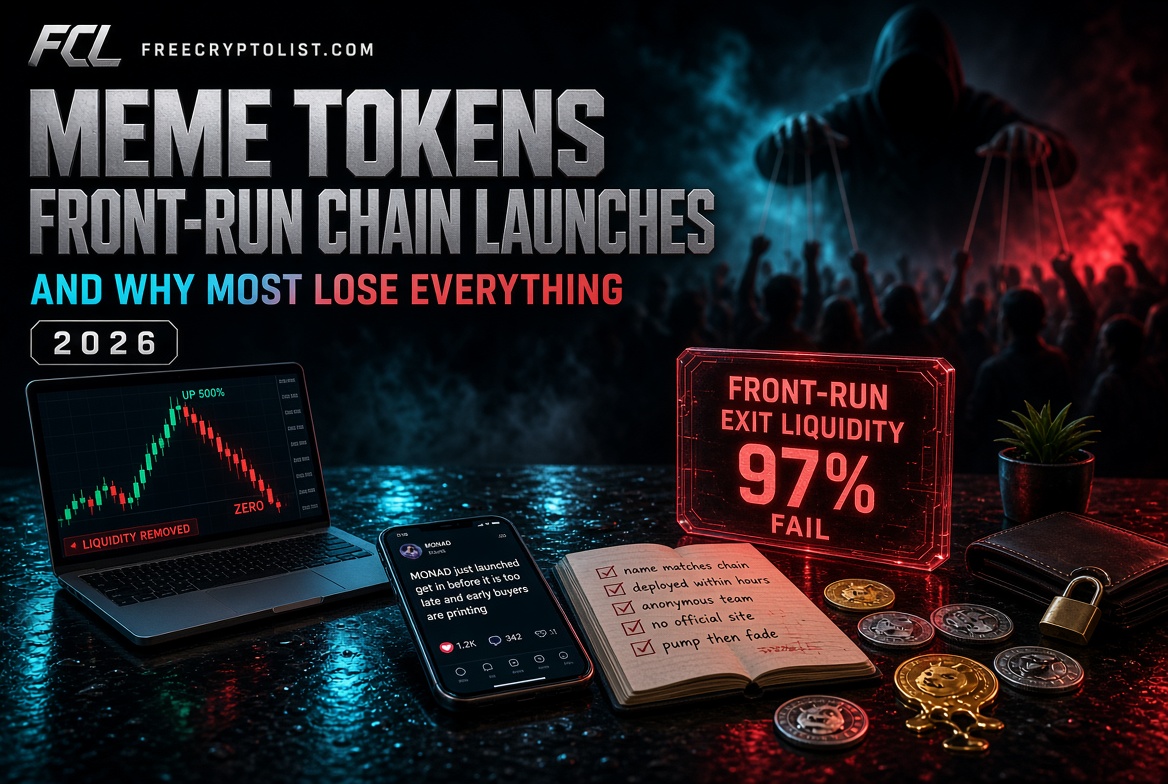
Every time a new blockchain announces a mainnet launch, the same thing happens within hours. Dozens of tokens appear on Pump.fun and other launchpads with names like “MONAD,” “MONAI,” “MON,” and “MONADDOG.” They spike 500% in an hour. Crypto Twitter fills with screenshots of gains. Then most of them go to zero within days.
This is one of the most predictable patterns in crypto – reliably profitable for the people running it, and reliably destructive for the people chasing it.
The short version: when a big new chain or project launches, copycat tokens borrow its name to catch people who search for it or confuse the two. These tokens have no connection to the real project, the people who launch them buy first and sell into the hype, and almost all of them end up worthless. The real opportunity around a launch is the legitimate ecosystem, not the name-alike tokens.
What Gets Copied – And Why It Works
When a new chain or major project approaches launch, everything public about it becomes raw material for copycats: the name, the expected ticker, the logo, the mascot, even technical details. On EVM chains, every network has a public Chain ID – Ethereum is 1, BNB Smart Chain is 56, Base is 8453 – and even those numbers sometimes end up in token names.
The play is simple: launch a token using that name before or right as the real thing goes live, ride the hype from people who confuse your token with the real project, and sell before most buyers realize what they bought.
It requires no technical skill, no real project, and no connection to the chain being launched. Platforms like Pump.fun let anyone deploy a token in minutes with no coding. The barrier to running this play is essentially zero.
The Monad Example
Monad is a high-performance EVM chain backed by Paradigm, Dragonfly, and Coinbase Ventures. As its launch approached, multiple tokens appeared with variations of the Monad name and branding – long before the real MON token existed. The genuine MON token launched alongside Monad’s mainnet on November 24, 2025.
Some of the copycats pumped dramatically on hype days. Some may still be trading. None of them have any connection to the actual Monad project.
The real Monad opportunity is in legitimate ecosystem protocols building on the chain. Some, like Kuru Exchange and gMonads, still have no token. Others, like aPriori, have already launched theirs – which is exactly how it’s supposed to work: a real product first, a publicly announced token later. Our Monad Ecosystem Airdrop Guide covers the ecosystem side, and we track what’s still live on our Active Airdrops page.
The meme tokens that borrowed Monad’s name have none of that. They exist to move money from late buyers to early buyers.
Why the Pattern Keeps Working
The mechanics rely on a few consistent human behaviors:
Fear of missing the next BONK. BONK was airdropped to Solana users on Christmas Day 2022 and later grew to a multi-billion-dollar market cap. It’s the classic example of a meme token on a rising chain producing extraordinary returns. But BONK was given away broadly and freely to real Solana users – it wasn’t a speculative copycat of a chain’s name. It became valuable because Solana grew and BONK was embedded in that ecosystem from the start. It’s the exception, not the template.
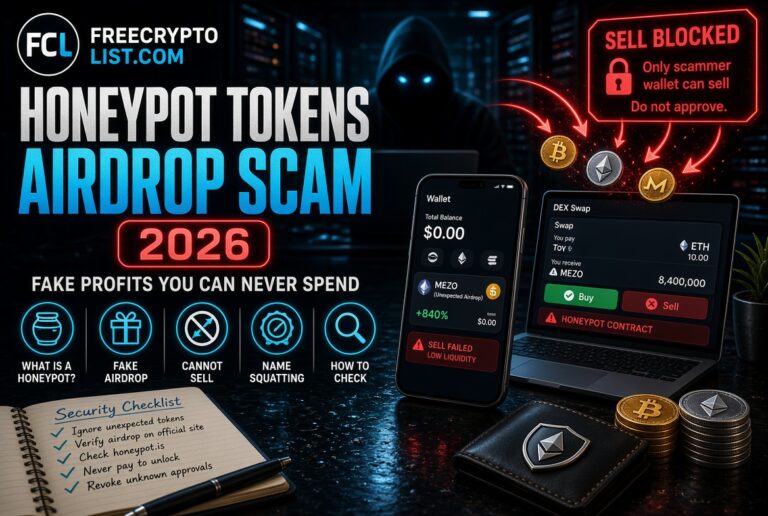
Name confusion. A token called “MONAD” on a DEX genuinely looks like it might be connected to Monad to someone who doesn’t know better. The confusion is the point – and it gets worse right around launch day, when people are actively searching for the real token. Scammers use the same trick by airdropping fake tokens with a real project’s name straight into wallets, as we saw with a fake “Mezo” token in our honeypot tokens article.
Speed advantage. The people launching these tokens buy early and heavily – often with bots. By the time a post about the token reaches most people, the early buyers are already positioned. New buyers arriving on the wave of hype become exit liquidity for the people who got there first.
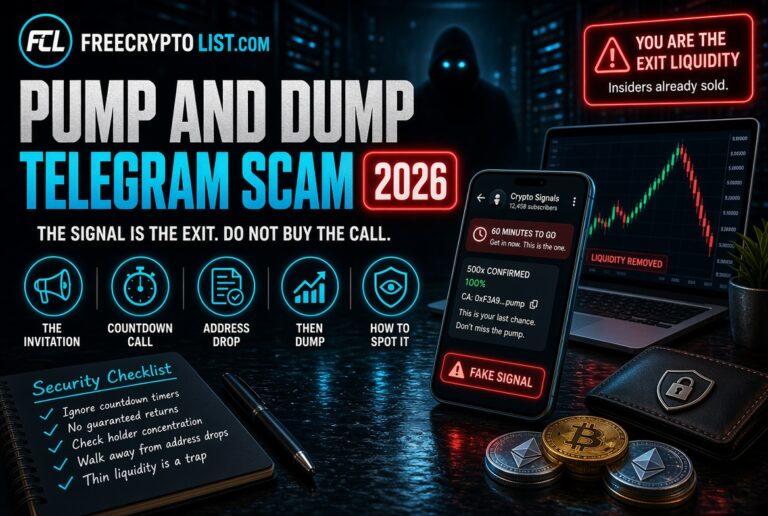
Bonding curve math. On Pump.fun, the earliest buyers get in at tiny fractions of a cent. A 10x move that feels incredible to a late buyer can be a 1000x return for the deployer. The math is never in the late buyer’s favor. We documented this from the inside in our pump and dump investigation.
The Numbers Are Brutal
When blockchain analytics firm Solidus Labs studied Pump.fun in 2025, it classified about 98.6% of the roughly 7 million tokens launched there since January 2024 as rug pulls or pump-and-dump schemes. Only about 97,000 still had at least $1,000 in liquidity. Pump.fun disputed the report, arguing that most meme tokens simply end up with little value. Either way, a copycat token named after a chain launch is starting from the worst possible odds.
The handful of meme tokens that have lasted – BONK, WIF, PEPE, SHIB – share traits that chain copycats almost never have: large, real communities, deep liquidity, and listings across major exchanges built up over months or years. Most copycats have none of these things. They have a borrowed name, a chart spike, and a clock ticking until the hype fades.
The Signal vs. The Noise
This is where the real distinction lives. When you see a new chain launching:
The noise looks like: “MONAD just launched, this token is up 500%, early buyers are printing, get in before it’s too late.”
The signal looks like: “Monad mainnet is live – here are the tokenless protocols building on it with real funding, and here’s how to build genuine early-user history before their tokens launch.”
The noise is louder, faster, and more exciting. The signal takes patience, research, and a willingness to wait weeks or months for a payoff that isn’t guaranteed but is at least based on something real.
The people who consistently do well in crypto lean toward signal. The people who consistently lose chase noise.
What to Do When You See a Chain Copycat Token
Check the official project first. Go to the real chain’s official website and social accounts – typed in yourself, not from a link. Has the project launched a token yet? If it has, what is the official contract address? A token whose address doesn’t match the official one is not the real token, no matter what it’s called.
Check the contract. Look up the token on a block explorer like Etherscan or Solscan. When was it deployed? Is the source code verified? A contract deployed hours after a chain announcement, from an anonymous wallet, is almost certainly a copycat.
Check who holds it. Use DexScreener to see liquidity and holders, and Bubblemaps to see whether the top wallets are linked. A few wallets holding most of the supply means they can dump on you at will.
Run it through a scanner. Token Sniffer flags common honeypot and scam patterns on EVM tokens; RugCheck does the same for Solana.
Ask who benefits from you buying. If the answer is “early buyers who are already positioned and need someone to sell to,” you have your answer.
The Smarter Play
When a new chain launches with genuine backing and real developer activity, the real opportunity is almost never the meme tokens copying its name. It’s the ecosystem being built on top.
Legitimate protocols on new chains:
- Have named teams and verifiable funding
- Build real products before launching tokens
- Run points programs that reward genuine usage over time
- Announce token launches publicly through official channels
That’s the pattern we follow in our Monad Ecosystem Guide and Solana Ecosystem Guide. The entry cost can be similarly low, but the risk profile and the basis for any potential reward are completely different.
Chasing a copycat token is a bet that you’re faster and better informed than the people who deployed it. You almost certainly aren’t. Building real early-user history on a well-funded protocol is a bet that the protocol will reward its early users, as similar protocols have done many times. It’s not guaranteed – but it’s based on something real. For a full process on judging any project, see our crypto due diligence guide.
Quick Reference – Copycat Token Red Flags
- Token name closely matches a chain or project that recently announced a launch
- Contract address doesn’t match the one on the project’s official website
- Deployed within hours or days of the announcement
- Anonymous team, no official website, no verified contract
- Massive early price spike followed by fading volume
- A few wallets hold most of the supply
- No official acknowledgment from the real project
- Launchpad origin with no ecosystem development afterward
📖 In This Section Pump and Dump Schemes · Honeypot Tokens · Rug Pulls · Active Airdrops
It means someone launches a token using the name, ticker, or branding of a new blockchain or project before or right as the real one goes live. The token has no connection to the real project. Its creators buy first, ride the hype from people who confuse the two, and sell before most buyers realize what they bought.
Go to the project’s official website and social accounts by typing the address yourself, and find the official contract address. If the token you’re looking at has a different contract address, it isn’t the real token, no matter what it’s called. If the project hasn’t launched a token yet, any token using its name is a copycat.
A few early buyers do, but most people lose. The creators and their bots buy first at the lowest prices and sell into the hype, so late buyers become their exit. A 2025 Solidus Labs study classified about 98.6% of Pump.fun tokens as rug pulls or pump and dumps, so copycat tokens start from very poor odds.
Yes, but BONK is the exception. It was airdropped for free to real Solana users in December 2022 and grew along with the Solana ecosystem. It wasn’t a copycat of a chain’s name designed to catch confused buyers, which is what most chain-launch meme tokens are.
Look at the legitimate protocols building on the new chain, especially those with named teams, real funding, working products, and points programs that reward genuine use. Building real early-user history with them isn’t guaranteed to pay off, but it’s based on something real, unlike a token that only borrows the chain’s name.
Sources: