Best Crypto Wallets for Beginners in 2026 (Hot & Cold Wallets Reviewed)
Updated September 27, 2026
Before you can collect faucet earnings, claim airdrops, or receive survey rewards, you need one essential thing – a crypto wallet. But with dozens of options out there, choosing the right one can feel overwhelming for beginners. If you just want the fastest path to your first wallet, our step-by-step setup guide covers that in under 5 minutes.
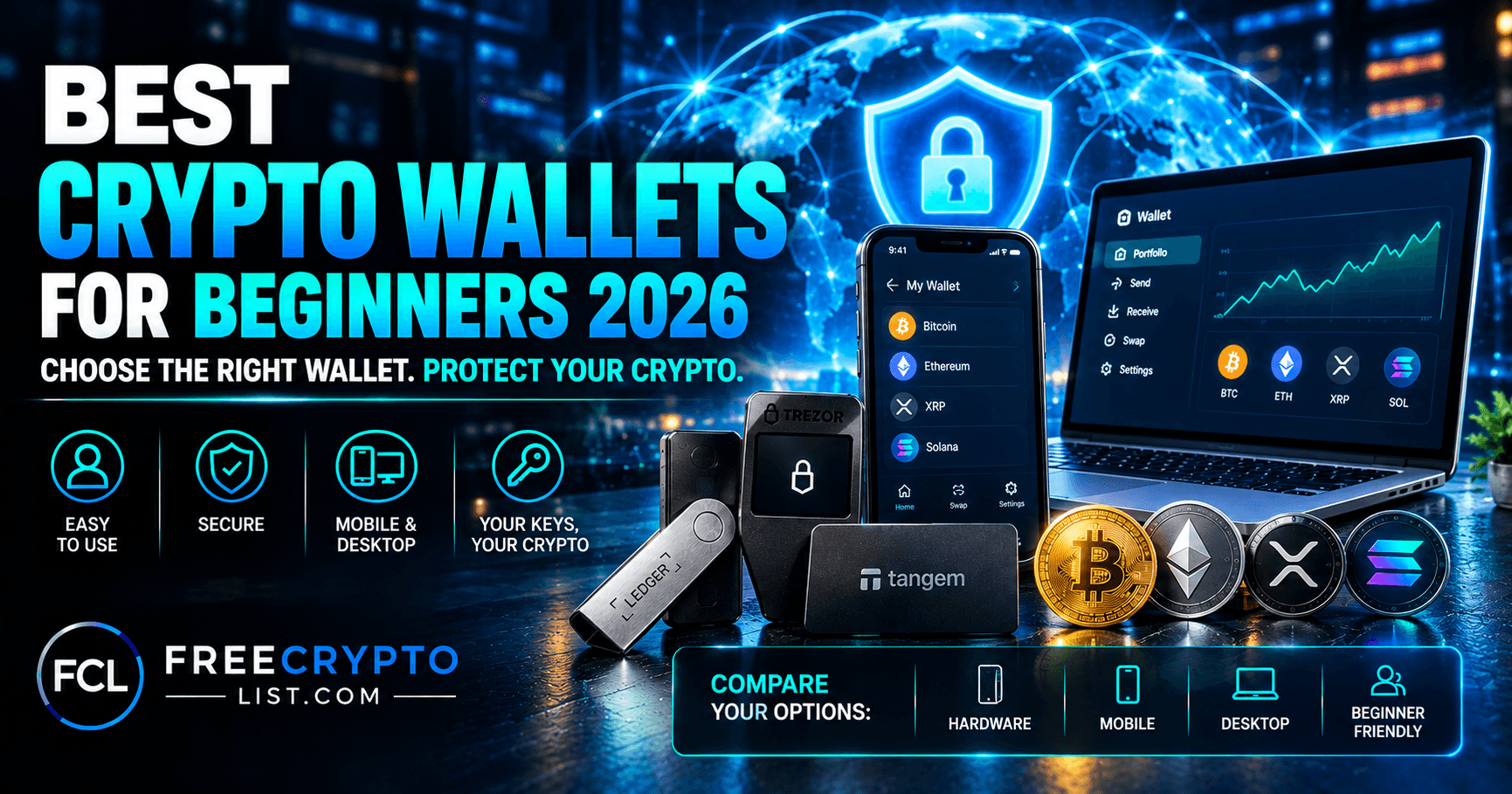
This guide breaks it all down simply. We cover the difference between hot and cold wallets, review the best options for 2026, and tell you exactly which wallet to start with depending on your situation.
What Is a Crypto Wallet?
Despite the name, a crypto wallet doesn’t actually store your cryptocurrency. Your crypto lives on the blockchain – the wallet simply stores the private keys that prove ownership and allow you to send and receive funds.
Think of it like a bank card. The money is in the bank, but the card is what gives you access to it. Lose the card (or your private keys), and you lose access to your funds.
There are two main types of wallets: hot wallets and cold wallets.
Hot Wallets vs Cold Wallets
Hot Wallets are software-based wallets – apps on your phone or browser extensions on your computer. They’re always connected to the internet, which makes them convenient for daily use but slightly more vulnerable to hacking.
Cold Wallets are physical hardware devices – similar to a USB stick – that store your private keys completely offline. Cold wallets are the best option for long-term storage because they meet higher security standards, but they can be more cumbersome for daily transactions or DeFi activities.
The general rule: Use a hot wallet for everyday earning and small amounts. Use a cold wallet for storing larger amounts long-term.
Best Hot Wallets in 2026
1. Coinbase Wallet – Best for Beginners Because it is backed by the resources of a public company, Coinbase Wallet offers some of the most robust customer support and educational resources in the industry. For beginners moving their first assets off an exchange, it provides a familiar environment that emphasizes safety and clarity, making the transition to self-custody feel less like a leap into the unknown. (Note: Coinbase briefly renamed this app “Base App” for about a year, but reverted it back to Coinbase Wallet in September 2026 – same product either way.)
Supported coins: Thousands
Platforms: iOS, Android, Browser extension
Best for: Complete beginners, Coinbase users
Full setup walkthrough: How to Set Up a Crypto Wallet
2. Trust Wallet – Best Mobile Wallet Trust Wallet is one of the most popular mobile crypto wallets in 2026, having passed 200 million downloads, and a strong candidate for the best mobile wallet for users who manage everything from a phone. It supports assets across 100+ blockchains and connects easily to DeFi apps and NFT platforms.
Supported coins: Assets across 100+ blockchains
Platforms: iOS, Android
Best for: Mobile-first users, multi-coin holders
3. MetaMask – Best for DeFi & Airdrops MetaMask is the go-to wallet for anyone participating in DeFi, airdrops, or interacting with Ethereum-based apps. It went genuinely multi-chain in 2026, and now supports EVM chains, Solana, and Bitcoin all from one account – not just Ethereum anymore.
Supported coins: EVM tokens, Solana, and Bitcoin
Platforms: iOS, Android, Browser extension
Best for: Airdrop hunters, DeFi users
4. Exodus – Best for Desktop Exodus is the go-to option if you want an easy-to-use crypto wallet available across multiple platforms with a broad number of supported assets. It has a beautiful interface, built-in exchange, and portfolio tracker – all in one app.
Supported coins: Hundreds of major assets
Platforms: Desktop, iOS, Android
Best for: Desktop users, portfolio management
5. Zengo – Best for Seed Phrase Anxiety Zengo is a hot wallet that replaces the standard seed phrase with MPC-based recovery. Access is split between the device and an encrypted backup rather than a single phrase, making setup easier and recovery less stressful for non-technical users. Still active and growing, having secured over 2 million wallets since 2018.
Supported coins: Bitcoin, Ethereum, Solana, TRON, and more
Platforms: iOS, Android
Best for: Beginners worried about losing their seed phrase
Best Cold Wallets in 2026
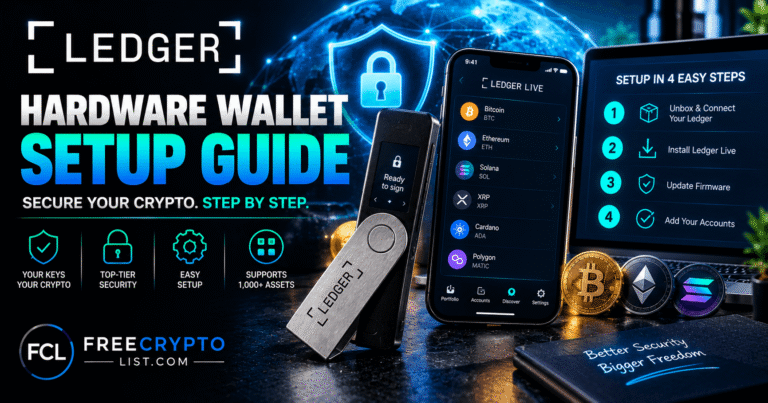
6. Ledger Nano S Plus – Best Hardware Wallet Overall Ledger is the most trusted name in hardware wallets by volume, though its security history is worth knowing before you buy – see our full Ledger review for the honest breakdown. The Nano S Plus offers a certified secure element at an accessible price point, supports over 15,000 coins and tokens, and connects to most major software wallets including MetaMask and Exodus.
Supported coins: 15,000+
Price: ~$59
Best for: Anyone serious about securing their crypto long-term
Setup walkthrough: How to Set Up a Ledger Hardware Wallet
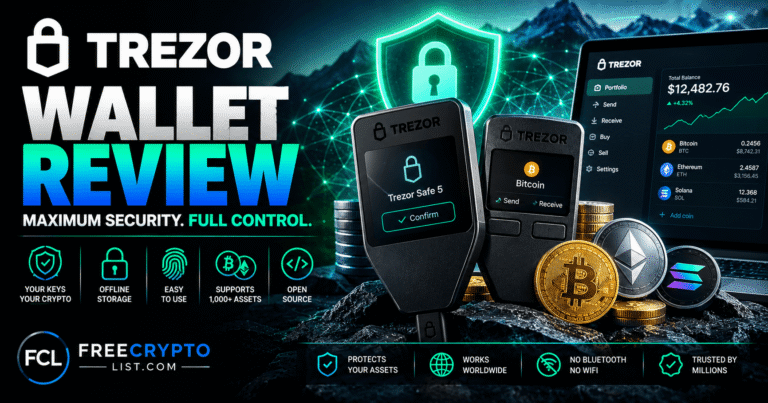
7. Trezor Safe 3 – Best Budget Hardware Wallet Trezor is Ledger’s main competitor and equally trusted in the crypto community – it’s also the only major hardware wallet that’s been fully open-source since it invented the category in 2014. The budget-friendly “Model One” has been discontinued; the Safe 3 is now the entry point into Trezor’s lineup, and it carries the same certified secure element as Trezor’s pricier models. See our full Trezor review for the complete lineup comparison.
Supported coins: Thousands
Price: ~$79
Best for: Budget-conscious users wanting hardware security with a fully open-source track record
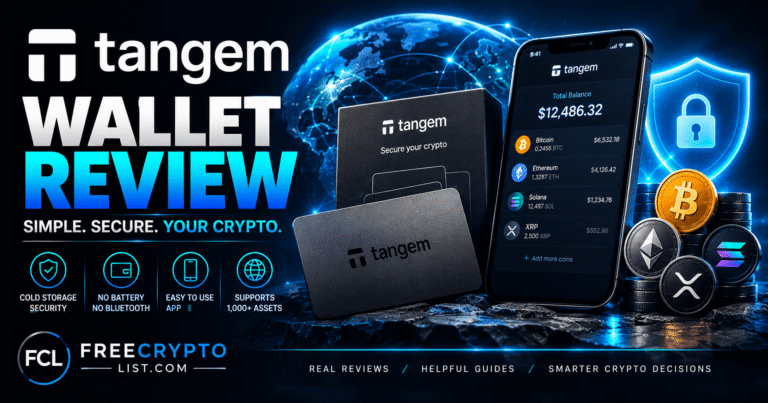
8. Tangem – Easiest Hardware Wallet Tangem is the easiest hardware wallet to use, with no seed phrase required by default, no cables, and setup in under 3 minutes. It works as a physical card or ring – tap it to your phone to sign transactions. Perfect for beginners who find traditional hardware wallets intimidating. Read our full Tangem review for the security track record and the seedless model’s one real limitation.
Supported coins: 16,000+ across 87+ blockchains
Price: $59.90 for 2 cards, $69.90 for 3 cards
Best for: Beginners who want hardware security without complexity
Which Wallet Should You Start With?
| Situation | Recommended Wallet |
|---|---|
| Complete beginner | Coinbase Wallet |
| Mobile user | Trust Wallet |
| Airdrop hunting | MetaMask |
| Scared of seed phrases | Zengo (hot) or Tangem (cold) |
| Storing larger amounts | Ledger Nano S Plus |
| Tightest hardware budget | Trezor Safe 3 |
| Easiest hardware wallet | Tangem |
| Want fully open-source hardware | Trezor |
Essential Wallet Safety Tips
Never share your seed phrase with anyone. Your seed phrase (usually 12 or 24 words) is the master key to your wallet. Anyone who has it can drain your funds instantly. No legitimate platform, support agent, or website will ever ask for it.
Write your seed phrase on paper. Don’t store it in a photo, notes app, email, or cloud storage. Write it on paper and keep it somewhere safe – ideally two copies in separate locations.
Double-check addresses before sending. Crypto transactions are irreversible. Always verify the first and last few characters of any wallet address before confirming a transaction.
Use a separate wallet for DeFi. Keep a dedicated wallet for interacting with new or unverified protocols. That way if something goes wrong, your main funds are safe. See our guide on wallet-drainer approval scams for how these attacks actually work.
Conclusion
For most beginners in 2026, the best starting point is Coinbase Wallet or Trust Wallet – both are free, easy to set up, and support everything you’ll need for faucets, airdrops, and survey earnings. Once your balance grows, add a Ledger, Trezor, or Tangem for secure long-term storage – read the full reviews of each before you decide which fits you best.
The most important thing is getting started – pick one wallet, set it up today, and you’re ready to start collecting all the free crypto opportunities on this site.
Check out our guides on the best crypto faucets, crypto airdrops, staking, and survey & task sites to start earning right away.
Coinbase Wallet is the easiest starting point thanks to its support and educational resources, closely followed by Trust Wallet if you want to manage everything from your phone. Both are free and take under 5 minutes to set up.
No, the Trezor Model One has been discontinued. Trezor’s current budget entry point is the Safe 3, which carries the same certified secure element as Trezor’s pricier models.
A hot wallet is a free app that stays connected to the internet, convenient for everyday use and small amounts. A cold wallet is a physical device that stores your keys completely offline, better suited for larger, long-term holdings.
Tangem is the main hardware wallet that skips the seed phrase by default, using an NFC card or ring instead. Zengo offers a similar seedless experience as a hot wallet, using MPC-based recovery instead of hardware.
Yes, and it’s a good habit – many people use a hot wallet for daily transactions and a separate cold wallet for long-term storage, plus a dedicated wallet for testing new or unverified DeFi protocols to isolate risk.
📬 Want to be notified when new airdrops go live? Join our free Airdrop Alerts list – no spam, unsubscribe anytime.
📖 More guides: How to Set Up a Crypto Wallet · How to Set Up a Ledger Hardware Wallet
In This Section: Ledger Wallet Review · Trezor Wallet Review · Tangem Wallet Review
← Back to Wallets & Guides